Save Our Sausalito Filing: Legal and Scientific Filing Exposes Project’s Fatal Flaws
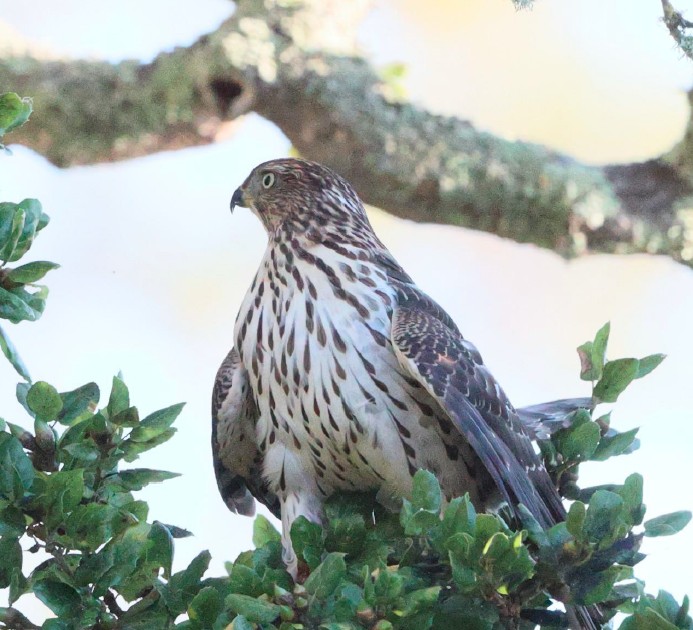
Sensitive species photographed in the Princess Grove on August 19, 2025. Western Grey Squirrel (left), Monarch Butterfly (center), and Coopers Hawk (right).
Save Our Sausalito has filed critical legal arguments and a devastating biological report that expose fatal flaws in both the 605 Bridgeway and 83 Princess Street development projects. Our attorneys at Lozeau Drury LLP and expert wildlife biologist Dr. Shawn Smallwood have identified why these projects cannot legally proceed under California law.
The developer will likely claim exemption under AB 130, brand new legislation signed just last June that allows some projects to bypass environmental review. However, our legal team has demonstrated this exemption fails on four independent grounds:
Historic structures: Project demolishes buildings listed on the California Register since 1984
Zoning violations: Exceeds height limits by 32 feet and density limits significantly
Tribal consultation: Required consultation with Native American tribes not completed
Protected habitat: Site documented as home to 20+ special-status species including Monarch butterfly
No Density Bonus = No Zoning Waivers
This legal finding is crucial. Projects eligible for California’s Density Bonus Law can waive many zoning rules and exceed height and density limits. This project is not eligible because the City already documented significant impacts to historic resources. Without density bonus eligibility, the project must comply with all standard zoning requirements—which it currently violates.
Princess Grove: Decades-Old Habitat Being Clear-Cut
Dr. Shawn Smallwood, a PhD ecologist with 37 years of California wildlife survey experience, documented that these two adjacent properties form a single unified habitat—Princess Grove. The developer proposes to clear-cut 33 mature trees:
17 protected California live oaks, buckeyes, and bay trees at 83 Princess
16 protected oaks and buckeyes at 605 Bridgeway
The arborist report states replacement is “infeasible.” Translation: once these decades-old trees are cut down, they’re gone forever. These trees ARE the habitat—they provide active nest sites, bat roosting cavities, and foraging areas for the species living there.
The "Princess Grove" is a habitat oasis. The aerial image above shows the outline of the proposed 605 Bridgeway development (right, in red) and the 83 Princess Street development (left, in orange). The numbered dots mark the developers’ proposed tree removals.
Total decimation. The photo rendering above shows both sites and all 33 trees the developer plans to eliminate. The "Princess Grove"—and all the wildlife that call these established trees, home—would be lost forever.
20 Special-Status Species Documented
Dr. Smallwood found 20 special-status species actively using Princess Grove, including:
Five bat species roosting in the trees (146 bat passes in just 2 hours)
Protected raptors including Cooper’s hawk, great horned owl, barn owl
Birds of Conservation Concern including western gull, oak titmouse, Allen’s hummingbird
Monarch butterfly (federal candidate for endangered listing)
An additional 117 special-status species have documented occurrences within 4 miles and potential to use these sites.
Devastating Quantified Impacts
Habitat Loss:
28 active bird nest sites destroyed
113 fledgling birds lost per year
127 birds per year lost to California when calculating breeding capacity
Bird-Window Collisions: Based on analysis of 213 scientific studies, the massive glass facades will kill 176-196 birds per year. The projects sit directly between oak woodland and the Bay—a deadly location for reflective glass.
Wildlife Predation: 98 new residential units will bring an estimated 16 free-roaming house cats, predicted to kill 1,952 wild animals annually.
What's Next
The developer’s appeal for the proposed luxury project at 605 Bridgeway will not be heard by the City Council on Tuesday, January 20, 2026, as previously anticipated. However, our legal filing demonstrates that full environmental review under CEQA is required—there are no valid exemptions. The community relies on SOS to hire the attorneys and experts needed to protect our neighborhood, historic district, and irreplaceable natural resources like Princess Grove.
The law is clear: this project cannot proceed as proposed.
The City has released a draft Request for Proposals for the MLK Park and Corporation Yard sites, and we’ve read its 38 pages carefully. The core protections of our charter and Measure K are there but it still needs..
Save Our Sausalito's attorneys have sent a formal letter to the City of Sausalito outlining significant legal, environmental, and factual flaws in the proposed multi-story luxury development at 83 Princess Street—known as "Monster #2."..
As we turn the page to 2026, we want to share what's on the horizon—and why your continued engagement will be more critical than ever. The work ahead requires resources, expertise, and sustained community support. Here's what Save Our..