What We Protect
Environment
Sausalito’s setting is spectacular — and fragile.
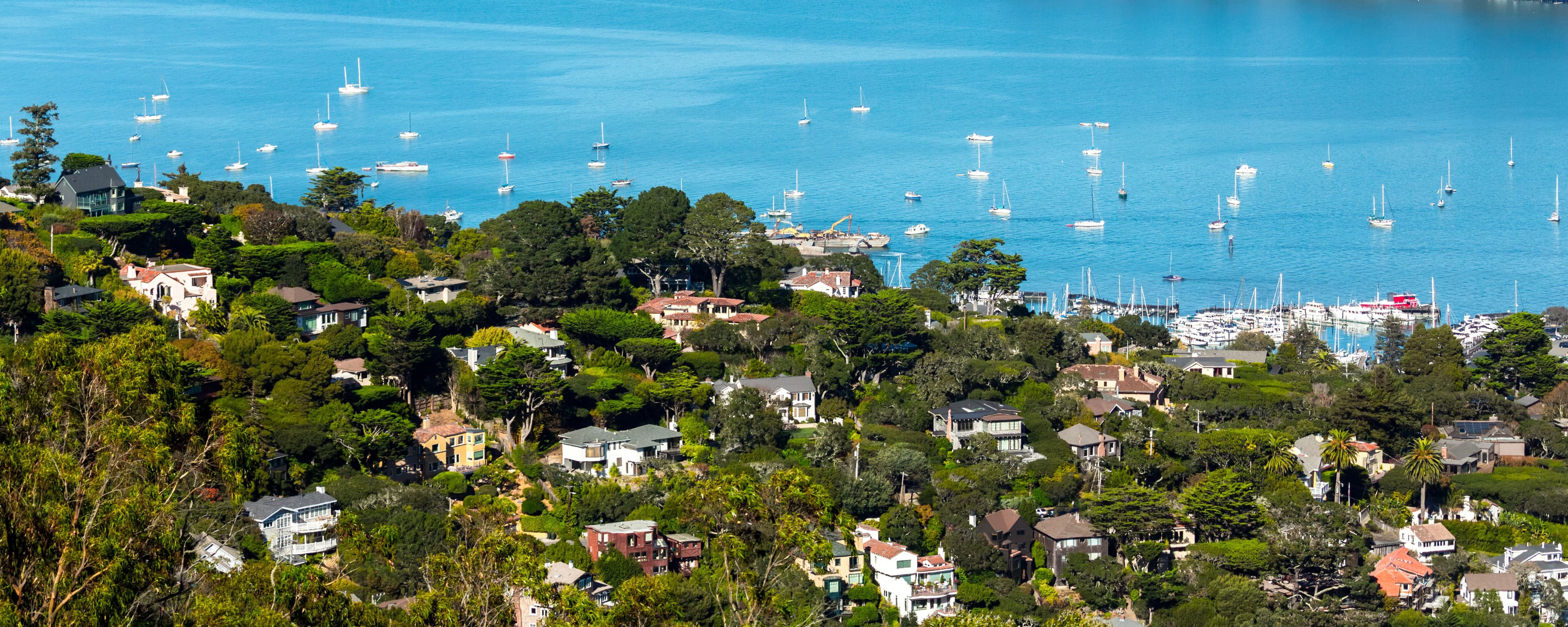
The same qualities that make Sausalito beautiful also make it vulnerable: bay front, steep terrain, low-lying flatlands, a maritime legacy, and a wildlife rich habitat. All are under pressure from development. Environmental protection is inseparable from everything else we fight for.
We called for full environmental evaluation of the proposed developments at 1 Harbor Drive, 83 Princess and 605-613 Bridgeway.
Wildlife and Habitat
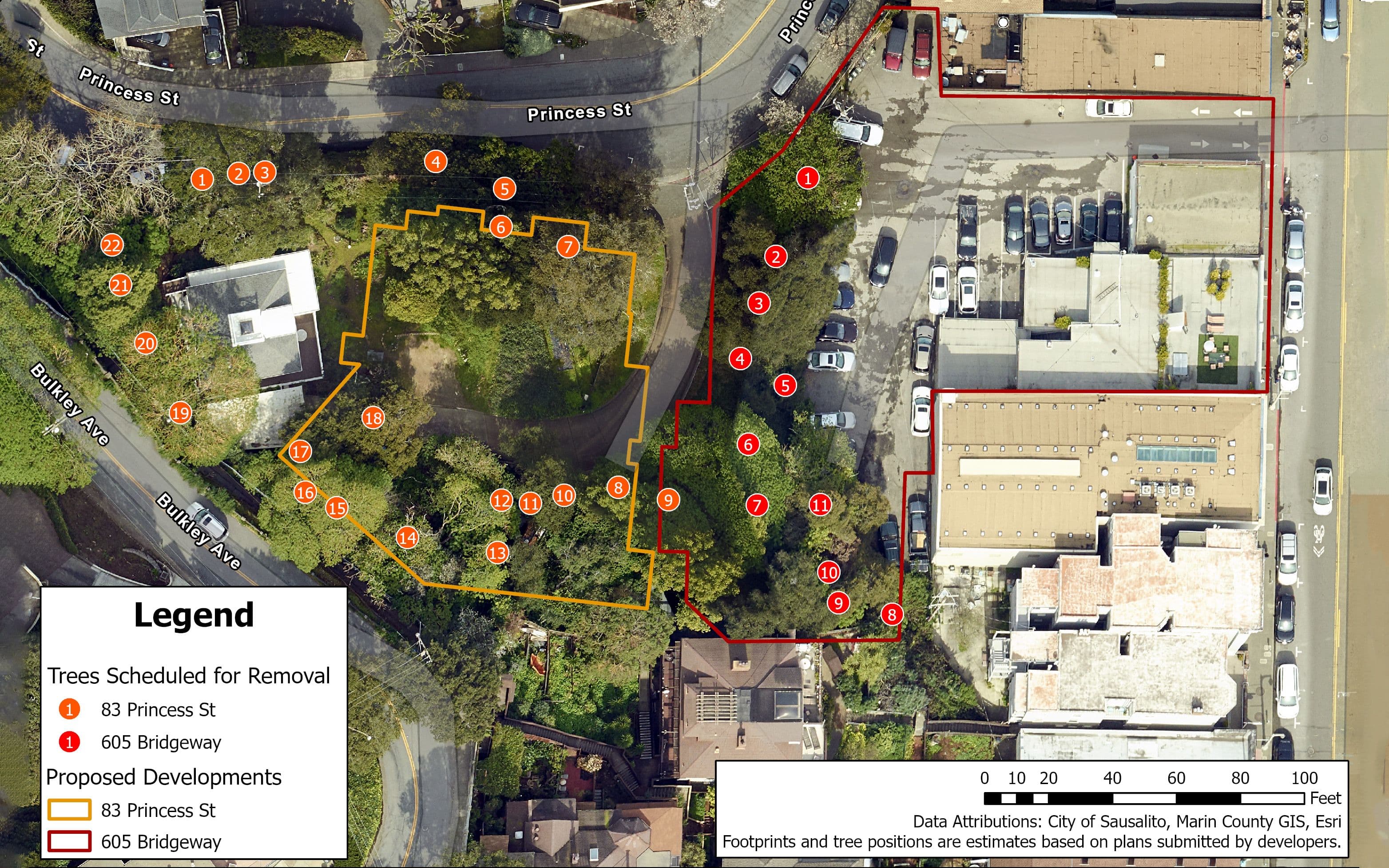
Sausalito has abundant wildlife. Hawks nest in the hillside oaks. Pelicans and cormorants work the waterfront. Richardson Bay is a significant wildlife corridor and feeding ground. Even downtown, behind the storefronts at 605 Bridgeway and 83 Princess, coast live oaks and buckeyes — some nearly a century old — support a dense pocket of urban habitat.
When a developer's plans called for clearing that grove, we commissioned wildlife biologist Dr. Shawn Smallwood to document what actually lived there. Over repeated surveys he found more than twenty special-status species on a single block: monarch butterflies, Cooper's hawks, great horned owls, five species of bat in a single evening. The grove fledges approximately 127 young birds a year. His analysis projected that a glass facade reflecting the bay would cause roughly 200 bird deaths annually from collisions alone.
All of it went to the city in writing, on the public record. That is our standard: not assertion, but documented evidence.
Land and Water Risk
Sausalito is built on steep hillsides above low-lying flatlands that extend to the bay. Both present serious and underappreciated risk.
The hillsides have a documented history of landslides. At 83 Princess, we highlight landslide risk as a material risk because the site's geology makes large-scale development dangerous and even the developer’s own geo-tech admitted it. Subsidence is an additional concern in the Marinship and other flatland areas, where much of the low-lying developed land is vulnerable.
Sea level rise threatens that same eastern flatland — not gradually but now from storm surge and increasing flood events. Much of the Marinship and surrounding low-lying areas of eastern Sausalito face serious long-term exposure. Any responsible development proposal in these areas must reckon with that reality.
Toxic Legacy and the Marinship
The Marinship's industrial past left a toxic legacy. Decades of shipyard operations contaminated soil and groundwater across parts of the district, and remediation obligations attach to development in ways that are not always transparently disclosed or adequately addressed.
We are actively researching environmental conditions in the Marinship and will engage on every project in this district that fails to honestly account for its toxic legacy and the remediation it requires.
Wildfire
Sausalito's hillside neighborhoods face real wildfire risk. Steep terrain, dense vegetation, and constrained evacuation routes are a dangerous combination — one that development proposals increasing density or reducing defensible space make worse.
We hold this as a standing concern and will challenge any proposal that increases risk to hillside residents or compromises the access and evacuation infrastructure they depend on.
We engage at every stage: commissioning independent studies, demanding environmental review, and putting findings on the public record.
Save Our Sausalito
Campaigns
What we’re working on to protect it
Historic District
83 Princess Street
Oppose: A 39-unit, 66-foot building that would clear-cut the Princess Grove, carve into a fragile hillside, and swallow an 1884 landmark home.
Historic District
605–613 Bridgeway
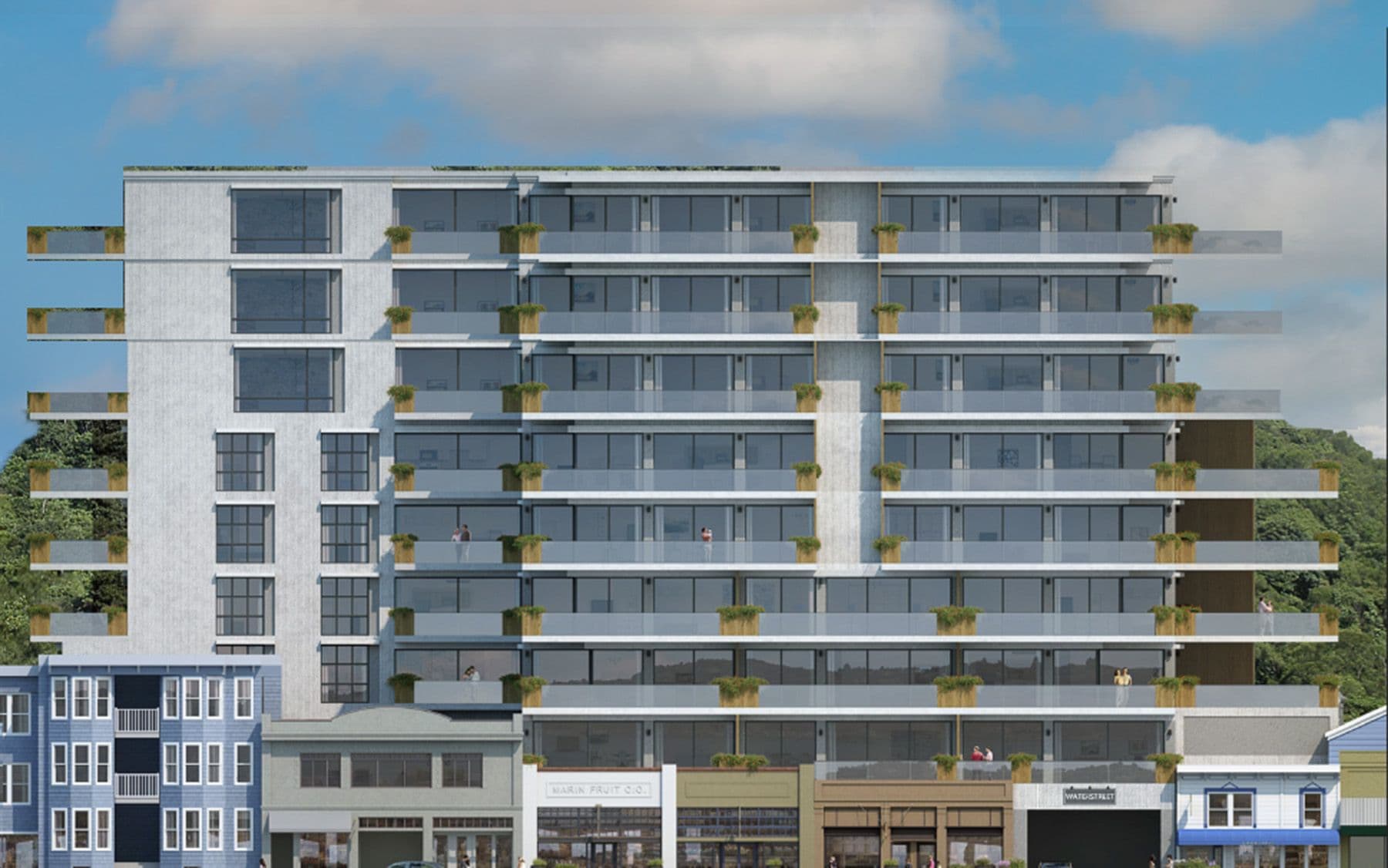
Oppose: The city has found this out of scale project inconsistent with zoning. It has no place in the Historic District.
Stand With
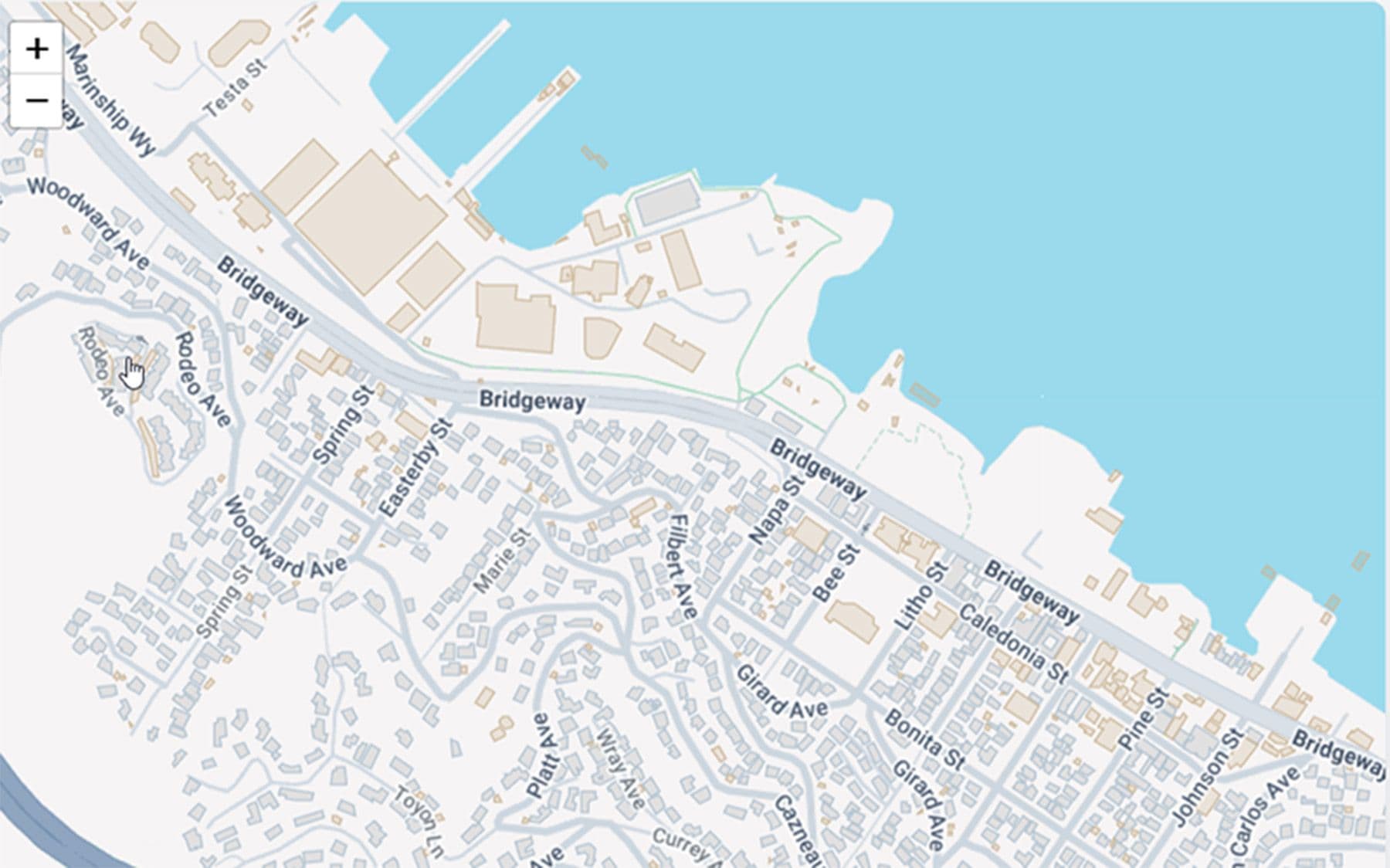
Nevada Street View Protection
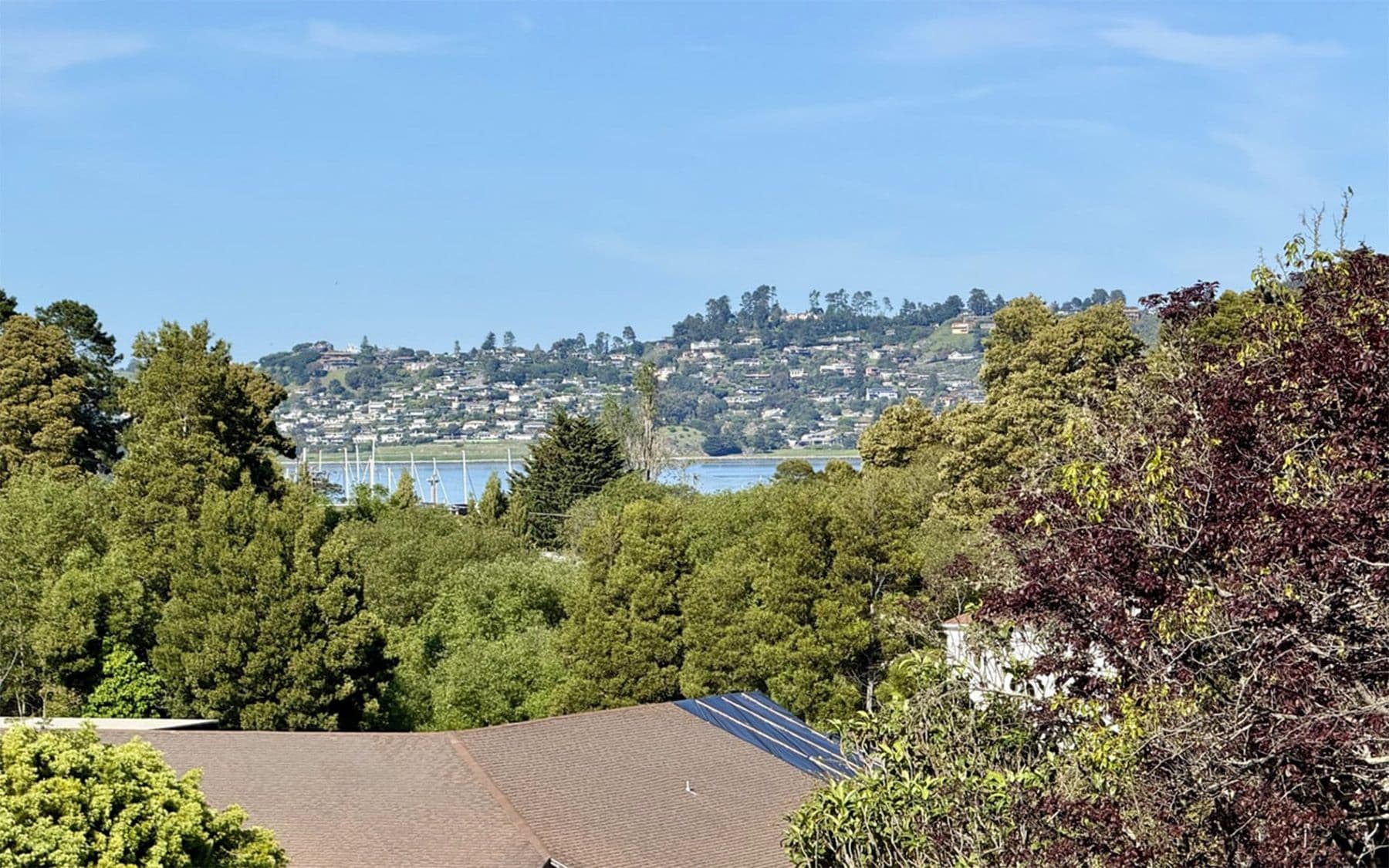
A draft RFP made view studies optional for developers. Nevada Street neighbors sent 88 comments, and the Council voted 5–0 to make them mandatory at both housing sites.
View Protection
ViewSync
SOS built ViewSync to measure a project's view impact from real elevation data. After a multi-step path, the City adopted it — developers must now use it before approval.
View Protection
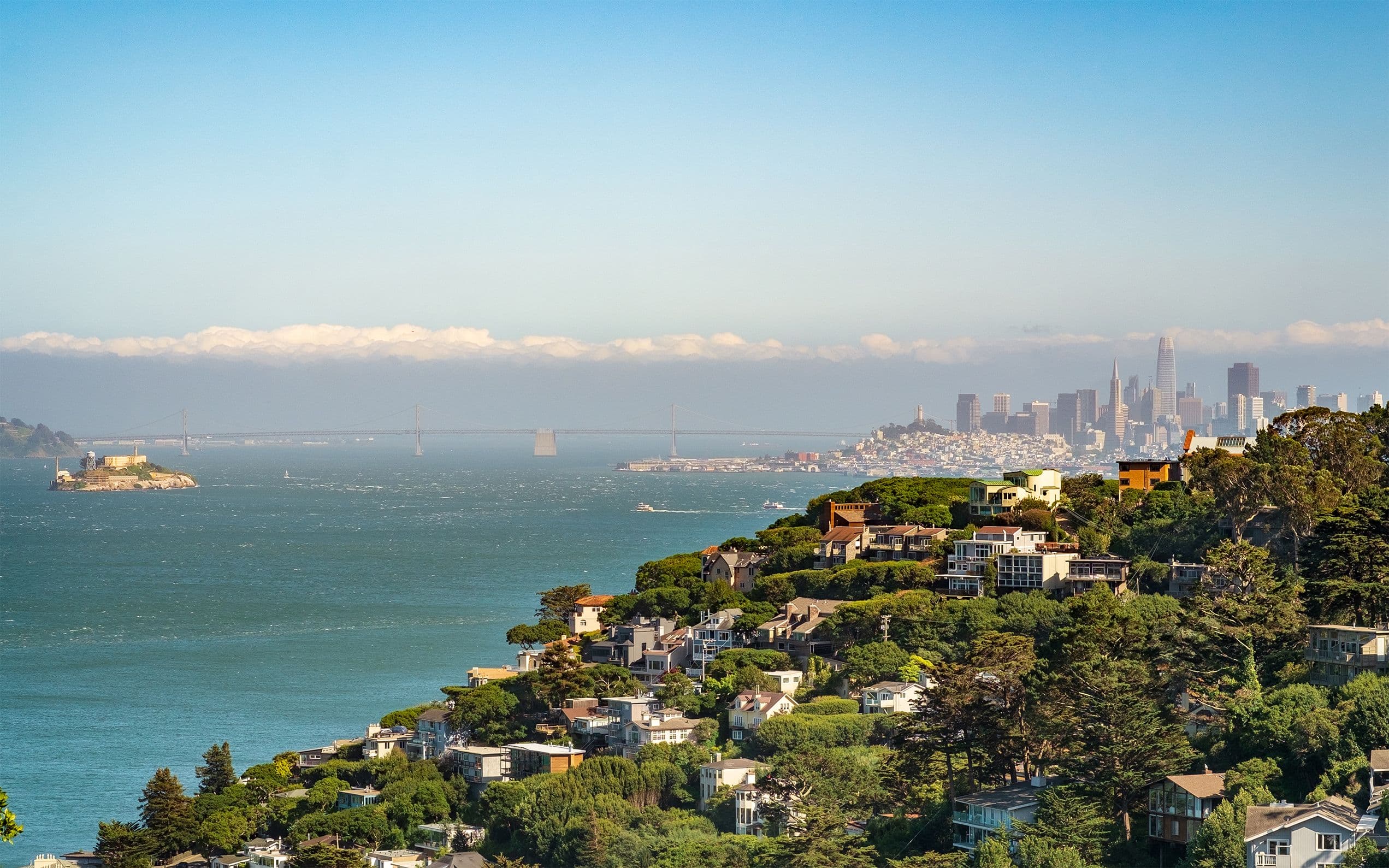
View Protection Standards
The City adopted view-protection standards 5–0 — developers must now measure a project's impact on public views, using ViewSync, before it can be approved.
Programs
The ongoing work
Latest
Recent updates
- Jun 4, 2026 · news
AIM Initiative – Allows increased density of 650% in the Industrial zone
- May 15, 2026 · Pelican Harbor · news
Pelican Harbor supported — council rejects the lease transfer 4–0
- May 8, 2026 · news
Introducing Stand With: a new way we’re showing up for neighbors
- Apr 28, 2026 · 605–613 Bridgeway · media response
SOS response to Marin IJ article on YIMBY appeal
- Mar 18, 2026 · Nevada Street View Protection · victory
View protection, restored in writing — a 5–0 vote for both city sites
- Mar 16, 2026 · Nevada Street View Protection · alert
View protection on the line at the Corporation Yard site